
IM Export Services works with leading experts to boost productivity and improve customer service

IM Export Services Limited, a leading manufacturer of bespoke timber cases, crates and pallets, has successfully doubled its daily manufacturing capacity after working with experts from Warwick Manufacturing Group (WMG) through the University of Warwick’s Innovation Lighthouse programme, funded by Bromsgrove and Redditch Council.

Recognising the need to improve workshop efficiency and support growing customer demand, the Redditch-based company worked closely with WMG to review its manufacturing processes and identify new opportunities to improve workshop and warehouse productivity. Following several site visits, the Innovation Lighthouse team recommended a series of practical improvements, which included redesigning the workshop layout and replacing the older workstations with modern benches.

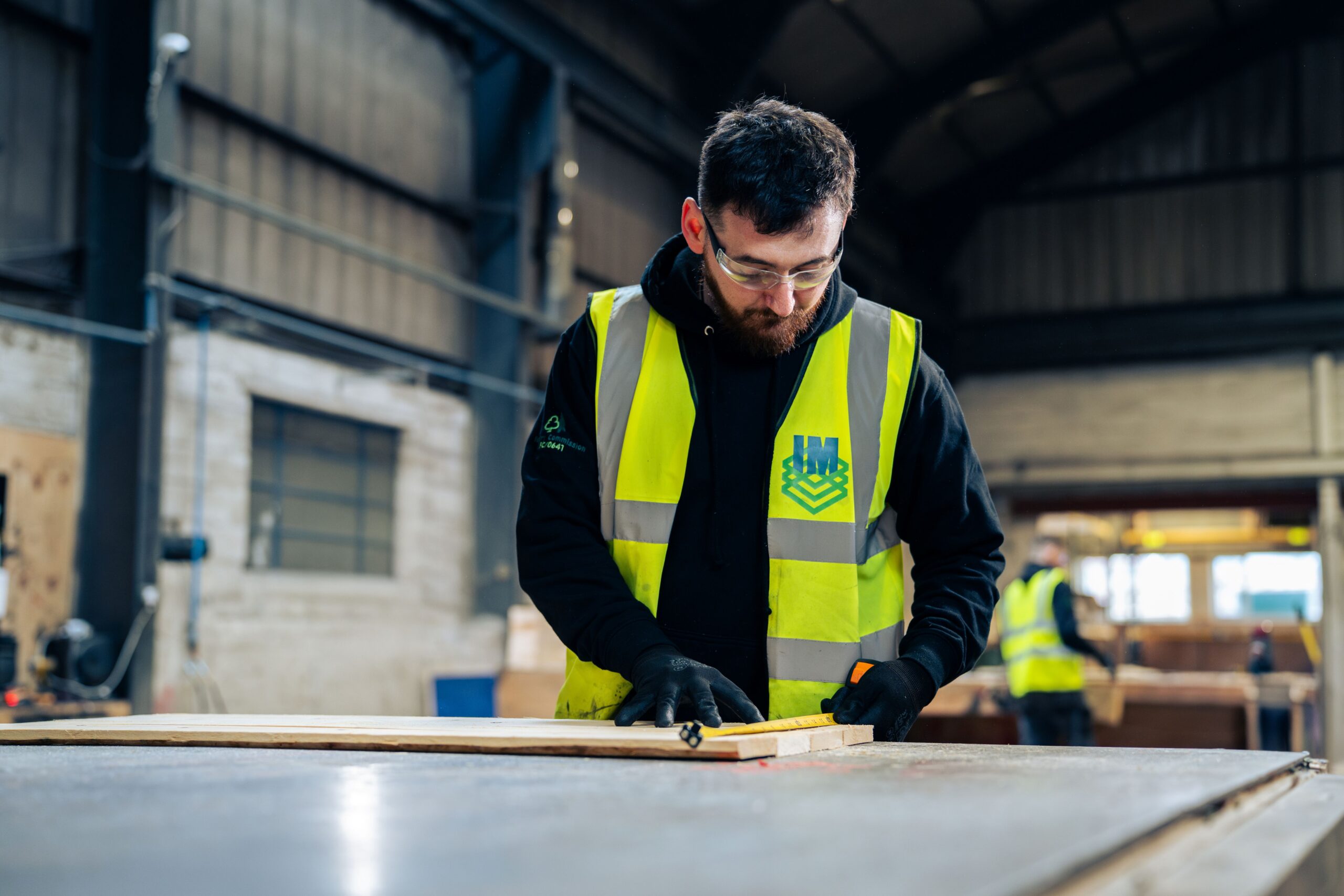
By implementing these recommendations, IM Export Services has transformed its workshop with new workbenches, creating dedicated workspaces for each team member, giving the company capacity to build up to twice as many timber cases and crates each day for customers across the UK. The new layout is expected to streamline movement across the workshop, reduce risks associated with using power tools and increase productivity, giving each team member a dedicated workstation.

Councillor Matt Dormer, Leader of Redditch Borough Council, said: 

“It’s great to see IM Export Services benefiting from the Innovation Lighthouse programme and achieving such impressive results. Redditch has a strong manufacturing heritage, and this success shows how the right support can help local businesses grow, become more productive, and strengthen their future prospects.”

The Innovation Lighthouse programme is designed to support SME manufacturers improve their productivity, and develop new products and processes, guiding them from initial concept through to implementation. By participating in the programme, IM Export Services will receive support and guidance to help deliver its project, as well as match-funded grants to assist with the delivery of the project.

IM Export Services has been providing export packing and timber packaging solutions for more than 20 years. The company serves customers across the engineering, manufacturing, aerospace and defence sectors, offering export packing, on-site packing and ISPM-15 certified timber packaging to help businesses transport cargo safely by road, sea and air.

As demand for its services continues to increase, IM Export Services plans to roll out further operational improvements throughout 2026 as part of its long-term workshop modernisation strategy.

Dr Federico Melotti, Principal Engineer in WMG’s SME Group, added:

“It has been a pleasure to work with IM Export Services. They are a strong and ambitious business with a clear focus on productivity, quality and customer service. This project shows how targeted operational improvements can make a real difference for an SME manufacturer. By working closely with the team, we identified practical changes to the workshop layout and workflow that will support greater efficiency, productivity and future growth.”

Redditch, Worcestershire, the company provides export packing, on-site packing and ISPM 15 certified timber packaging, helping businesses transport cargo safely by road, sea and air.

Ready to discuss your next project? Contact our team today or give us a call on 01527 521 685.

For more information on the Innovation Lighthouse Programme, contact Worcestershire Growth Hub on 01905 677 888 or email info@worcestershiregrowthhub.co.uk. More information about WMG is available here.
How to pack heavy machinery for export the right way: Our top tips

Packing heavy machinery for export? Here are 6 useful tips to help protect your equipment, keep it secure and avoid delays.

Export packing heavy and oversized machinery isn’t always as straightforward as you might think. There are several factors that need careful consideration, which is why we’ve put together a checklist of our six top tips for packing machinery safely and efficiently.

Tip 1: Inspect every piece of equipment beforehand

First things first, carrying out a thorough inspection and assessment is one of the most important steps. This helps with planning and ensures you know exactly what you’re working with. Make sure you:

  • Make a note of the dimensions and weight
  • Identify all lifting points & inspect any fragile or exposed components
  • Check for any internal or moving parts that may need securing to prevent movement or loss of calibration during transit

Tip 2: Consider disassembling

If possible, disassembling machinery into smaller sections can make a huge difference. Not only does it make packing and container loading easier, but it can also open up more shipping options that may be more cost-effective.

For any disassembled equipment, make sure all components are clearly labelled so they can be easily reassembled at the destination. This also helps ensure all parts are accounted for during packing and reassembly, especially when working from a packing list.

Tip 3: Use the correct packing materials

Using the right packing materials is essential. Steel strapping, treated timber and heavy‑duty cases or skids are commonly used when exporting heavy machinery.

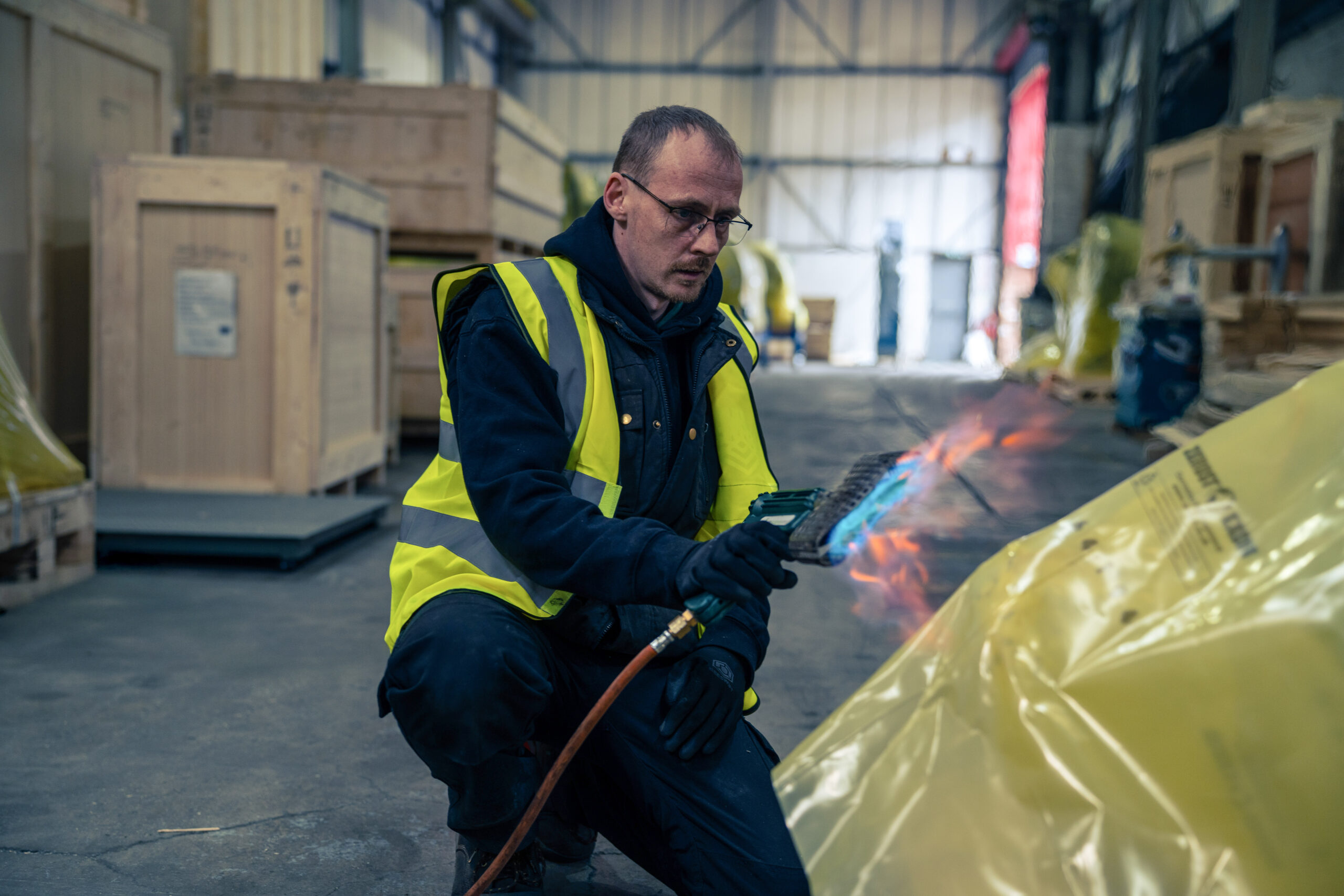
You may also need to consider additional moisture protection, particularly when using ocean freight. Options include foil vacuum bags, shrink wrapping or blue case lining material, which can be applied to internal panels or the exterior of the case. This leads onto our next point…

Tip 4: Protect equipment against moisture damage

Moisture protection is crucial. When machinery is shipped overseas, especially by sea, any metal components must be protected against water and damp conditions. We recommend the following packaging options:

Without this protection, there’s a high risk of corrosion or internal damage before the equipment even arrives.

Tip 5: Keep everything secured

One of the biggest risks during transit is movement. Even slight shifting can lead to costly damage if equipment isn’t properly secured. To reduce this risk, ensure the machinery is:

  • Bolted or securely strapped to a skid
  • Supported with internal timber bracing to prevent movement
  • Fixed firmly in place so nothing can shift during transport

Tip 6: Export regulations

Finally, make sure your shipment meets all international export requirements. This includes making sure all timber materials are ISPM 15 compliant and that the correct export documentation is in place before dispatch. Failure to meet these requirements can result in delays, additional costs or in some cases, cargo being rejected at port.

By adhering to all relevant regulations, your business can safeguard operations, maintain a strong reputation and reduce the risks associated with international trade. Our sister company, IM Freight Forwarding, can support your business by providing expert guidance with international trade compliance and logistics.

“Common issues we see when machinery isn’t packed correctly. Packing mistakes can create big headaches once machinery is on the move. Parts can shift and throw off calibration and components can move aorund. That’s why it’s so important to follow these steps to avoid any issues further down the line.” – Joe Nolan, Director of Operations

Need support with a current or upcoming export project?

… let us know. We can visit your site, discuss your project, assess your requirements and recommend the best approach, taking the pressure off managing the move yourself. We also offer on‑site and in‑house export packing solutions for heavy machinery, factory relocations and specialist equipment.

For more information, send us a message or email [email protected].

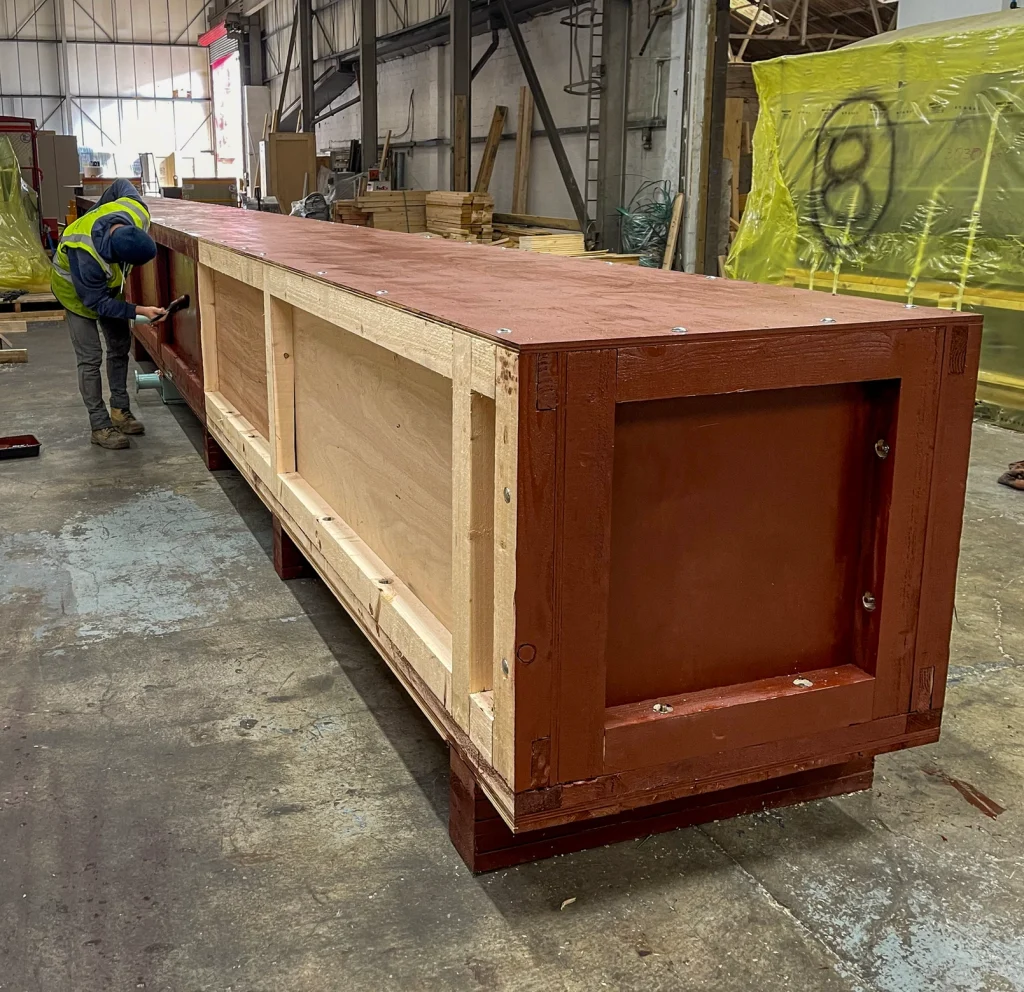
IM Export Services builds a 15-metre-long military case to the highest standard

We work with suppliers to the Ministry of Defence (MOD) to design and build military cases in-house, manufacturing bespoke cases that meet strict MOD standards. One of our projects was to design and build a 15-metre-long Level J case, built to protect specialist military equipment being shipped from the UK to Canada.

For this project, our team was responsible for designing and constructing a reusable MoD-approved case for a 15-metre-long military shaft. The case meets Level J standards, the highest protection level under MoD packaging requirements. Our team designed it to provide maximum safety for valuable or sensitive cargo travelling through challenging and unpredictable environments.

Meeting Level J standards meant paying close attention to:

  • Strength and stability for heavy loads and long journeys
  • A reinforced frame made from high-grade plywood and timber
  • A reusable design to reduce waste
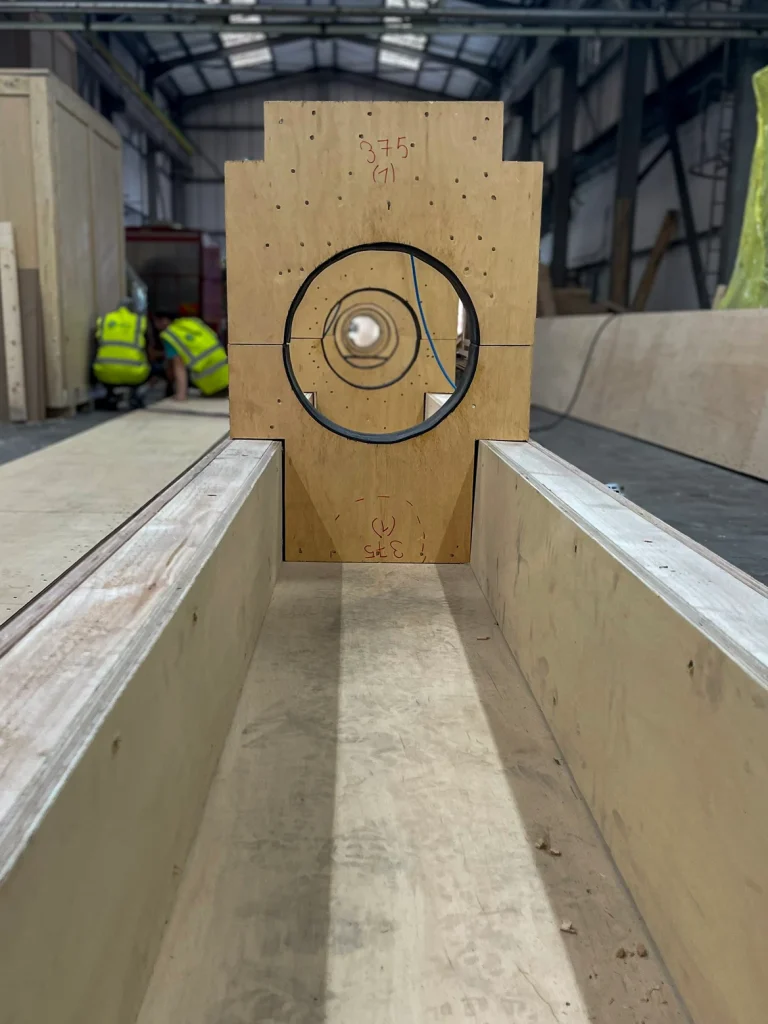
  • Custom internal supports shaped precisely to fit the shaft

The design and build process

Our team designed and built the case in-house, using our CAD system to design and measure before moving into production. Considering its size and weight, we made sure that the case remained stable and supported throughout every phase of the build.

We reinforced the internal frame with heavy-duty timber and plywood panels, adding bespoke internal supports and mounting points to keep the case secure during shipping.

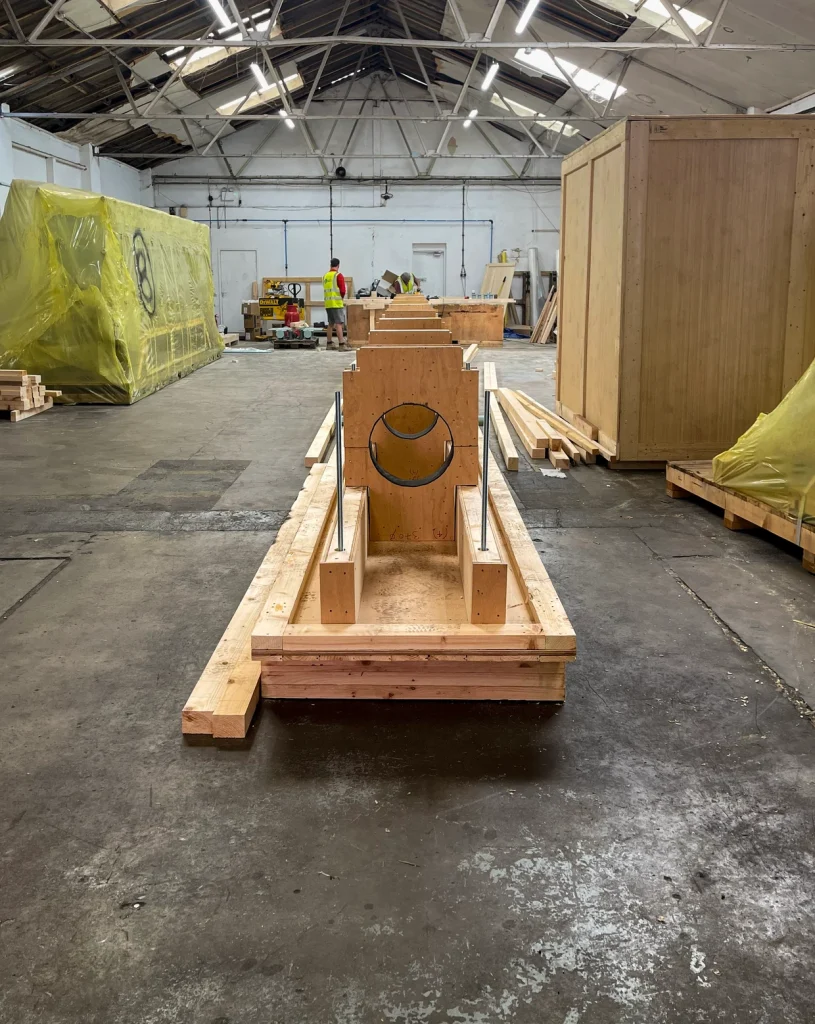
The case featured steel-studded fixings running through multiple custom scallop supports, each fitted with 5mm foam linings to prevent vibration and the internal layout included four scallop sections of varying diameters (ranging from 315mm to 375mm), each reinforced with 15mm plywood supports for added rigidity.

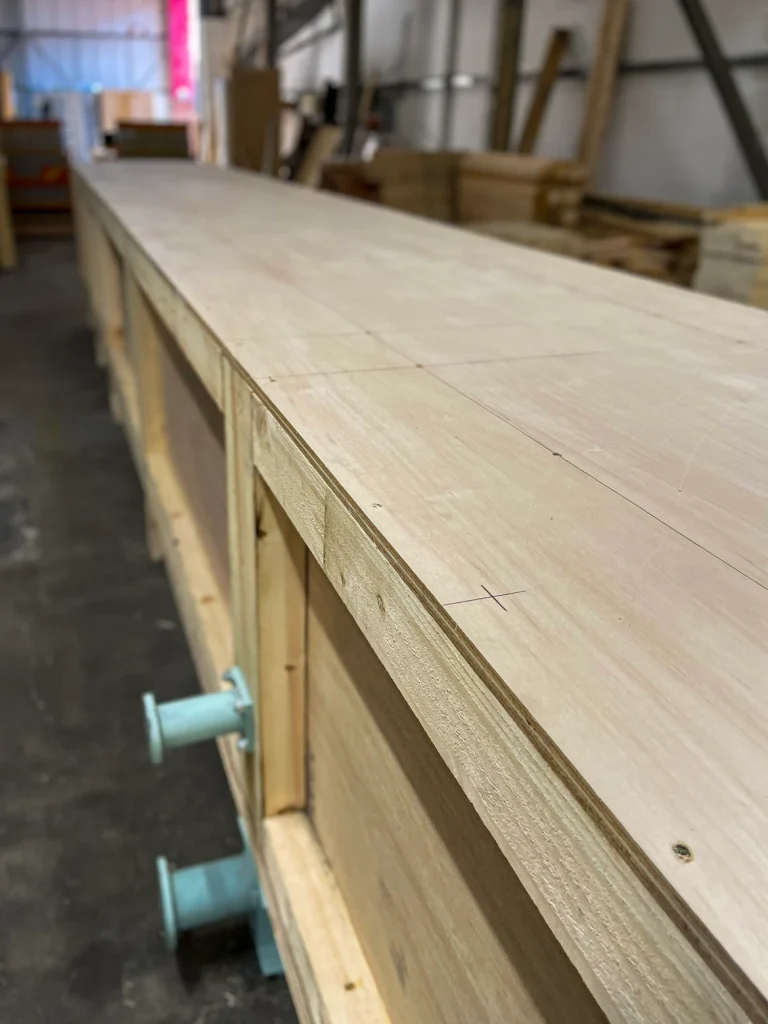
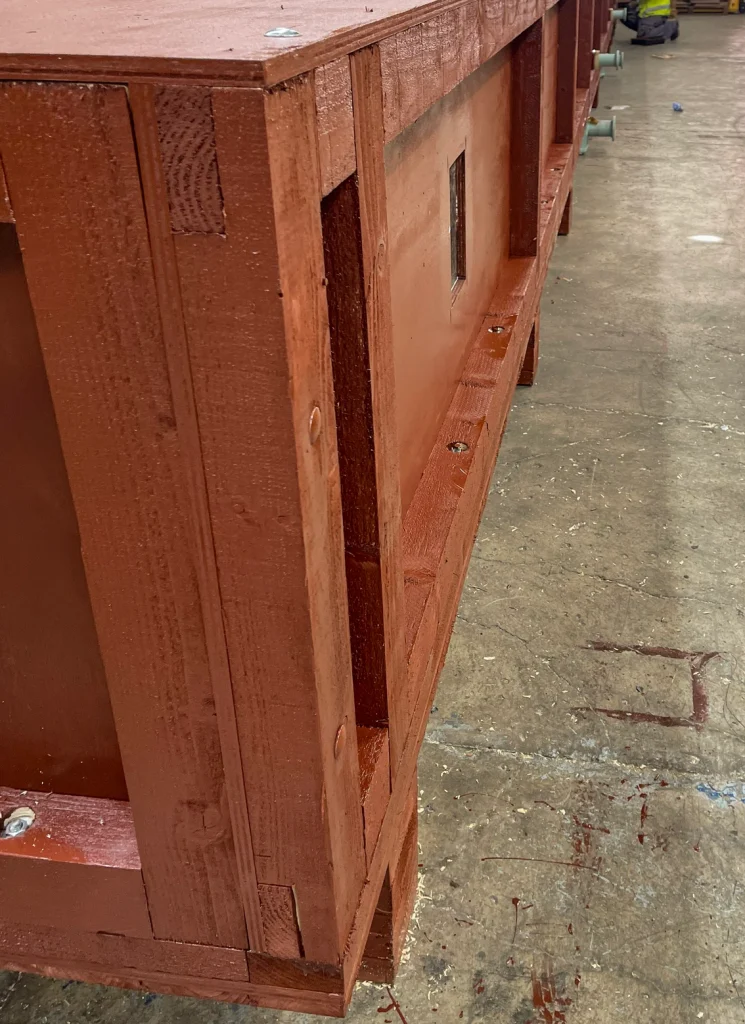
We built the outer structure with 75 × 100 mm timber framing along the full internal length, combined with a steel and plywood frame, and fitted a top hat-style lid to strengthen the upper section.

The final result

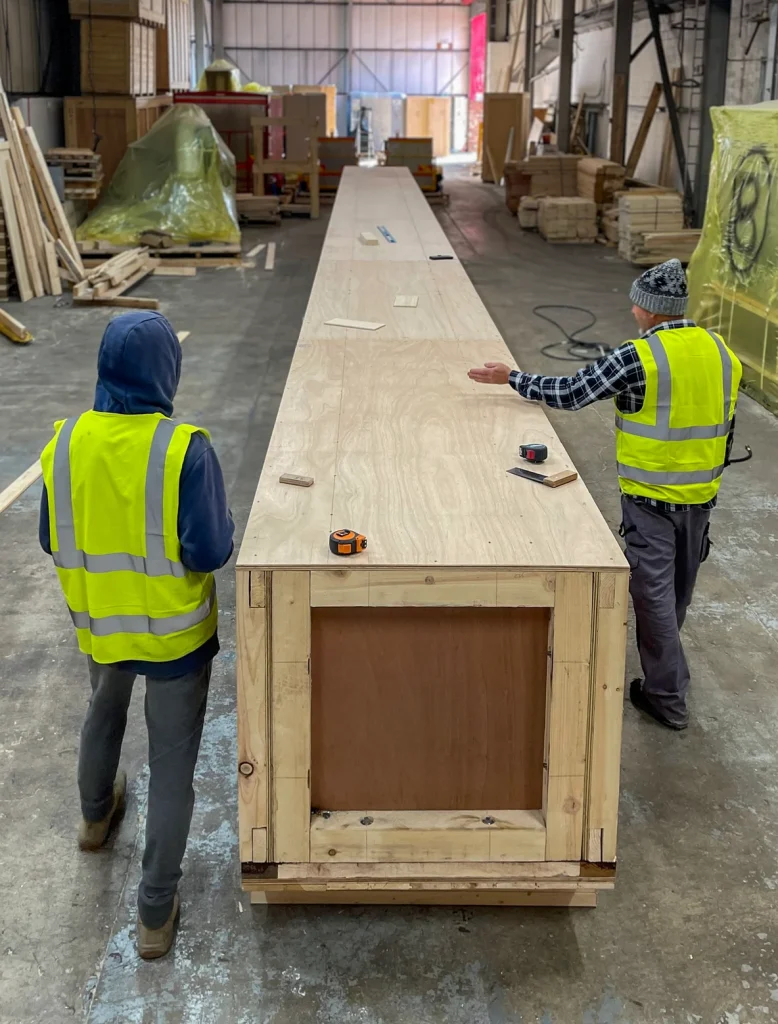
Our team built the case in just over a week, then carefully moved it out of our warehouse and forklift-loaded it onto the lorry. The case weighed around 10 tonnes and measured 14,365 mm in external length.

We regularly work on packing projects for the Ministry of Defence, providing bespoke designs tailored for suppliers throughout the UK. If you would like to learn more about our MoD projects or discuss your upcoming project, please contact our team or click here for more information.

To learn more about how we support MoD and defence projects, visit our Aerospace and Defence services page.

Building a Military of Defence case
Initial base and internal support structure built for the case.
The process of building a case
Internal framework aligned and prepared for bespoke supports and mounting points.
Military of Defence case
Panels fitted to form the main body of the case, creating a rigid protective structure.
Military of Defence case
Full case structure assembled and checked prior to final reinforcement and finishing.
Military of Defence case
Protective coating is applied to enhance durability and resistance.
Military of Defence case
Case completed showing reinforced edges and final exterior finish, ready for final inspection and shipment.